
Plants
Plants that walk with you
The best-loved plants for your cycle, one by one: what each brings and when it can help you.
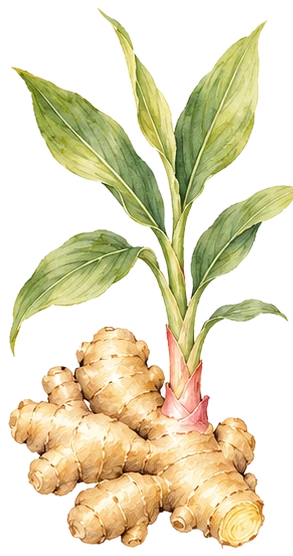
Ginger
A spicy root that warms you from the inside. Much used in tea for period pain.
Enter →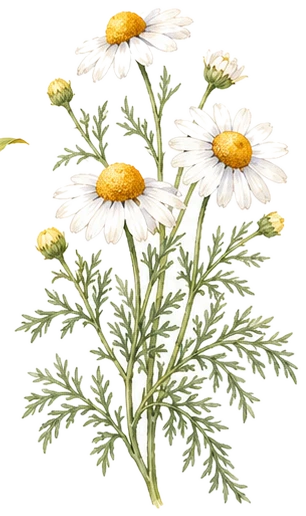
Chamomile
Gentle and calming. Relaxes your belly and helps you rest.
Enter →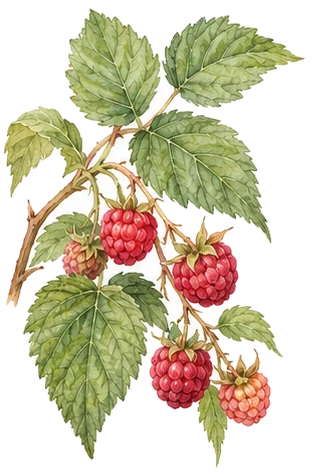
Raspberry leaf
The traditional womb plant, rich in minerals. Much used in the premenstrual and menstrual phases.
Enter →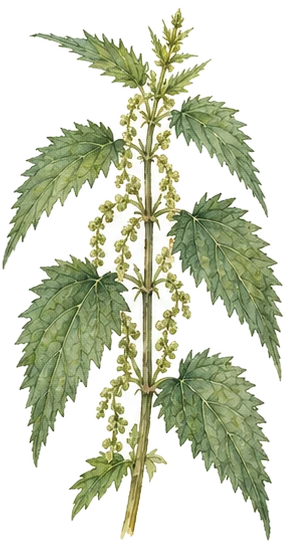
Nettle
Full of minerals like iron. Nourishes you all through your cycle.
Enter →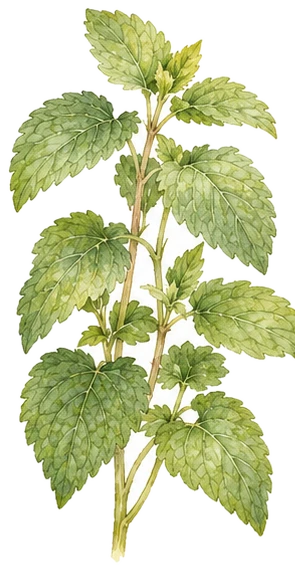
Lemon balm
Calms the nervous system and keeps you company on your most sensitive days.
Enter →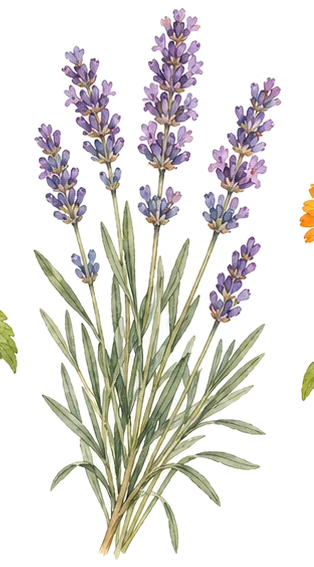
Lavender
Relaxing and fragrant. Lovely as a light tea or in a hot bath.
Enter →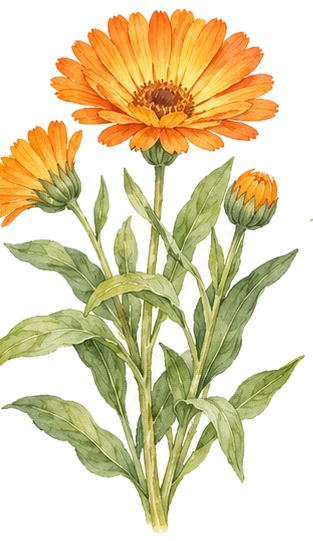
Calendula
A flower of the sun, traditionally linked to the cycle and the skin.
Enter →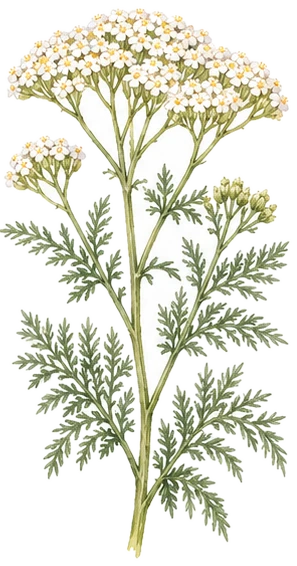
Yarrow
One of the herbalists' classic plants for the cycle.
Enter →Ginger
A spicy root that warms you from the inside. In kitchens all over the world it's the first thing people reach for when it's cold or their belly hurts.
What it offers you
- Warms the body and gets the circulation moving.
- Eases period pain and cramps. Some studies compare it to mild painkillers.
- Soothes nausea and helps digestion.
In your cycle: above all in the menstrual phase and the days before your period, when your body asks for warmth.
How to take it: a few slices of fresh root simmered for 10 minutes. With lemon and a little honey it's delicious.
Keep in mind: if you get heartburn or take blood thinners, go gently and ask first.
Chamomile
The classic, the one our grandmothers made for us. Gentle, but it does a lot.
What it offers you
- Relaxes the muscles and calms period cramps.
- Helps digestion and eases gas and bloating.
- Calms the nerves and gets you ready for sleep.
- On the skin, as warm compresses, it soothes irritation.
In your cycle: in the menstrual and premenstrual phases, when your belly feels sensitive.
How to take it: a tablespoon of flowers per cup, covered for 5 minutes. Best at night.
Keep in mind: if you're allergic to daisies or other flowers in that family, it's better to avoid it.
Raspberry leaf
For centuries, raspberry leaves have been the womb plant above all others in the midwives' tradition.
What it offers you
- Tones the uterus: traditionally used to make your period easier.
- It's rich in minerals like magnesium, iron, calcium and potassium.
- It's gently astringent, so it's also taken when your period is heavy.
In your cycle: in the premenstrual and menstrual phases. You can also drink it daily for several cycles, as a tonic.
How to take it: a tablespoon of dried leaf per cup, covered for 10 minutes. It has a mild taste, a bit like green tea.
Keep in mind: if you're pregnant, take it only if your midwife suggests it.
Nettle
The one that stings in the fields is one of the most nourishing plants there is. Dried, it doesn't sting at all.
What it offers you
- It's very rich in iron, calcium, magnesium, silica and vitamins.
- Helps you get your strength back after your period.
- It's cleansing and diuretic: it helps with fluid retention in the days before your period.
- Strengthens hair, nails and skin.
In your cycle: at any time, and especially at the end of your period and in the pre-ovulatory phase.
How to take it: a tablespoon per cup, covered for 10 to 15 minutes. The young leaves are also lovely in soups and omelettes.
Keep in mind: if you take blood pressure medication or blood thinners, ask first.
Lemon balm
It smells of lemon as soon as you brush its leaves. It's the plant of calm and good humour.
What it offers you
- Calms anxiety, irritability and nerves.
- Helps you sleep better.
- Relaxes the belly and soothes a nervous stomach.
- Lifts your mood a little when it's low.
In your cycle: in the premenstrual phase, when everything feels closer to the surface.
How to take it: a small handful of fresh leaves or a tablespoon of dried leaf, covered for 5 minutes. It goes very well with chamomile.
Keep in mind: if you take thyroid medication, ask first.
Lavender
Its scent alone is relaxing. It's a plant for slowing down and letting go of tension.
What it offers you
- Relaxes body and mind, and helps you fall asleep.
- Eases tension headaches.
- Its oil, diluted, is perfect for massaging your belly when it hurts.
- A little bag of flowers under your pillow helps you rest.
In your cycle: in the menstrual and premenstrual phases, to rest and let go.
How to take it: just a little, a pinch of flowers per cup, because the taste is strong. Also in a hot bath with a handful of flowers.
Keep in mind: the essential oil is not for drinking and never goes neat on the skin; always mix it with a plant oil.
Calendula
Its orange flowers open with the sun and close at dusk. It's a great friend to the skin.
What it offers you
- Calms inflammation and helps the skin heal.
- Traditionally used to support painful or irregular periods.
- As an oil or cream, it cares for sensitive skin and intimate areas.
In your cycle: in the menstrual phase. Its oil, at any time.
How to take it: a tablespoon of flowers per cup, covered for 10 minutes. For the oil, steep the dried flowers in olive oil in the sun for a few weeks.
Keep in mind: don't take it if you're pregnant or allergic to daisies and their family.
Yarrow
It has a thousand fine, feathery leaves and white flowers in clusters. Herbalists call it the great regulator of the cycle.
What it offers you
- Traditionally used to regulate the cycle when it goes its own way.
- Helps with heavy periods and with painful ones too.
- It's bitter and helps digestion.
- In sitz baths, it soothes the pelvic area.
In your cycle: in the premenstrual and menstrual phases.
How to take it: a teaspoon per cup, covered for 10 minutes. Best in short spells.
Keep in mind: don't take it if you're pregnant or allergic to daisies and their family.
Where to find them
You'll find them dried in herbalists and bulk shops. If you can, choose organic and locally grown.
If you're pregnant, breastfeeding or taking medication, check first with your doctor or midwife.
And how do I combine them?
There's a tea for each phase of your cycle, with the exact recipe for one cup.
See the teas